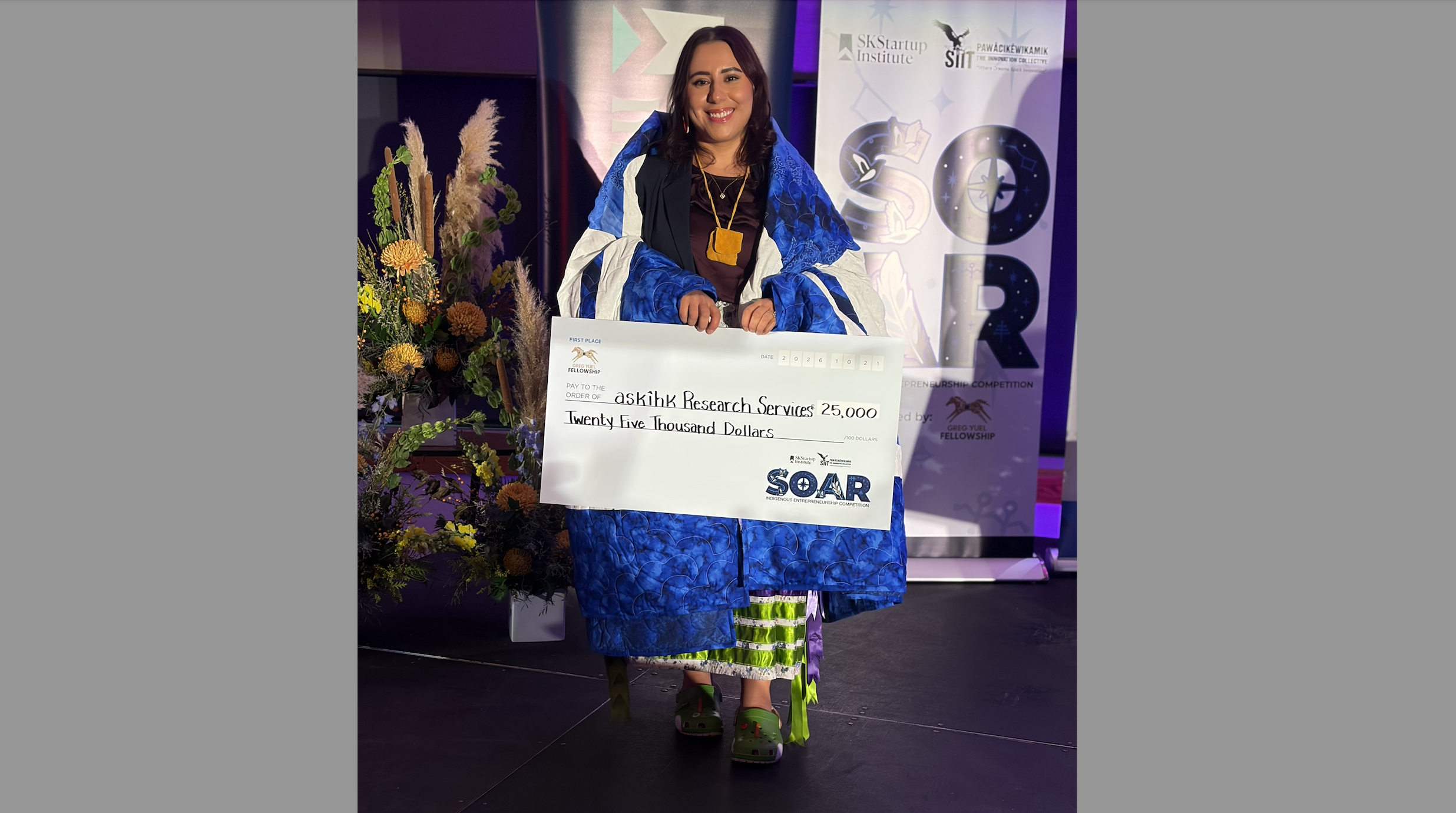
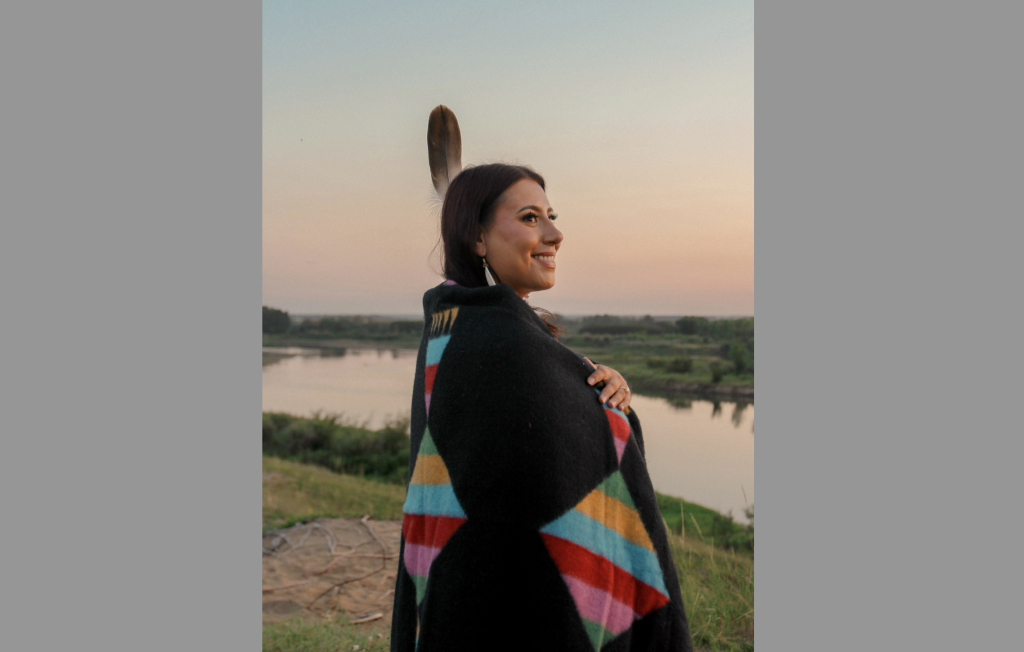
Micaela Champagne was awarded the top prize in the 2026 SOAR Indigenous Entrepreneurship Competition (photo submitted by Micaela Champagne)
askîhk Research Services

SOAR competition win fuels Indigenous-led mission to honour survivors

Oct 29, 2026 | 12:03 PM

Micaela Champagne is grounded in truth.

Her company, askîhk Research Services, of which she owns 51 percent, was created out of a need to conduct culturally safe and accurate investigations into the whereabouts of missing children from former Indian Residential Schools.

This October, Champagne and askîhk Research Services were awarded the top prize of $25,000 in the SOAR Indigenous Entrepreneurship Competition, presented by the Saskatoon Regional Economic Development Authority (SREDA).

The win not only gave Champagne confidence as a business-person, but granted her a special moment with the person who inspired her career.

“It felt quite surreal. It was emotional because my kookum was there that night and I really, really wanted her to know that this win was not for us as a company, but for her. Everything we’ve done with this company is to honour her, her siblings, and to honour all of those survivors,” said Champagne.

“This competition made me feel less alone as an entrepreneur. Before this, I did not consider myself an entrepreneur – a scientist and archeologist, yes, but not an entrepreneur.”
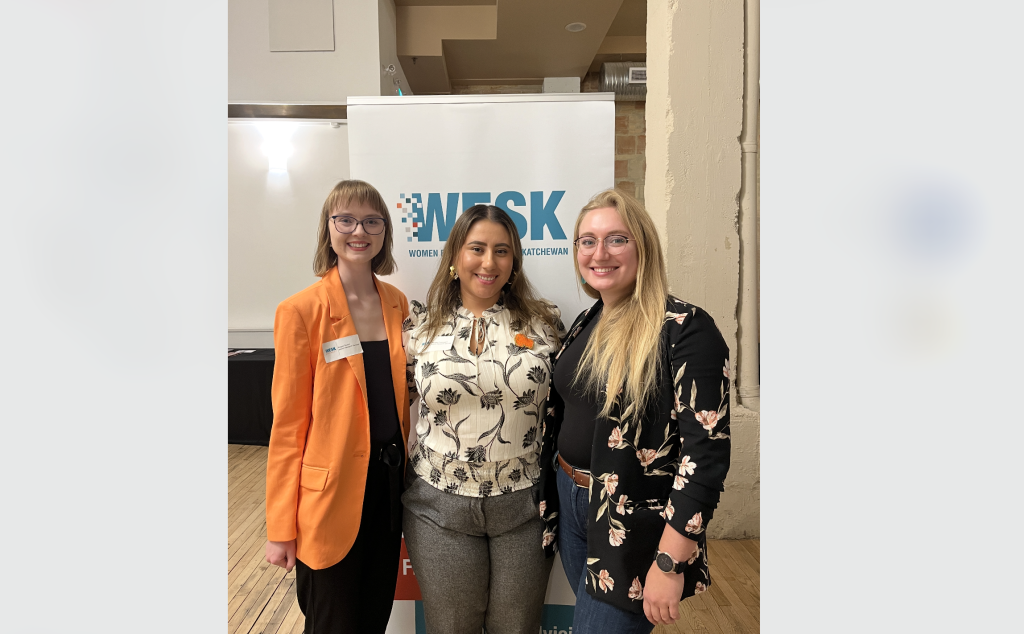
Champagne, with two of her three business partners, Angela Burant (left) and Kathleen Willie (right)

Initially based out of the University of Saskatchewan (USask), askîhk Research Services began their own independent company in order to create more trust with the nations they were working with. Co-owned with Kathleen Willie, Angela Burant, and Terence Clark, Champagne, who is a member of Canoe Lake Cree First Nation, leads all the cultural protocols within the company and creates an environment for Indigenous people and communities who want research done in a manner that is safe, respectful, and culturally-informed.

“We want people to understand the science behind (what we’re doing), and how it can benefit them,” said Champagne.

“We’re never going to have that same, intimate knowledge of the land that people in the community have when we go to a site, so it’s very important that we’re working with their community-led scientists and experts.”

In less than two years, askîhk Research Services has already worked with 13 different First Nations and institutions across Canada, the majority of which are located in Saskatchewan, Alberta, and British Columbia.
Champagne, a member of Canoe Lake Cree First Nation, was inspired to pursue archaeology after a trip to Egypt (photo submitted by Micaela Champagne)

Champagne’s path to starting askîhk Research Services was led by her intuition, which took her to the other side of the world. Initially a medical student, Champagne became quickly disillusioned in her program due to institutional racism with some of her classmates believing Indigenous students didn’t deserve to be there.

She took off time to travel, which led her to Egypt. There, she witnesses archaeologists working at the Valley of the Kings where they restoring one of the pharaoh’s tombs. Inspired by what she had witnessed, Champagne enrolled in archeology courses at USask, but still hadn’t envisioned applying her newfound passion to her own culture.

“When I took a North American archeology class, it hadn’t dawned on me before that we have such a rich cultural history here that could be brought forward and people could learn from the past through archeology,” said Champagne.

“When that announcement in Kamloops happened (finding over 200 unmarked burial targets near a former residential school), it was another moment where it clicked and I was like – I need to be doing this.”

Once Champagne realized her calling, she got her hands on as many textbooks and papers she could, researching different technologies like ground penetrating radar and different geophysical applications. She also wasn’t afraid to reach out to experts in the field.

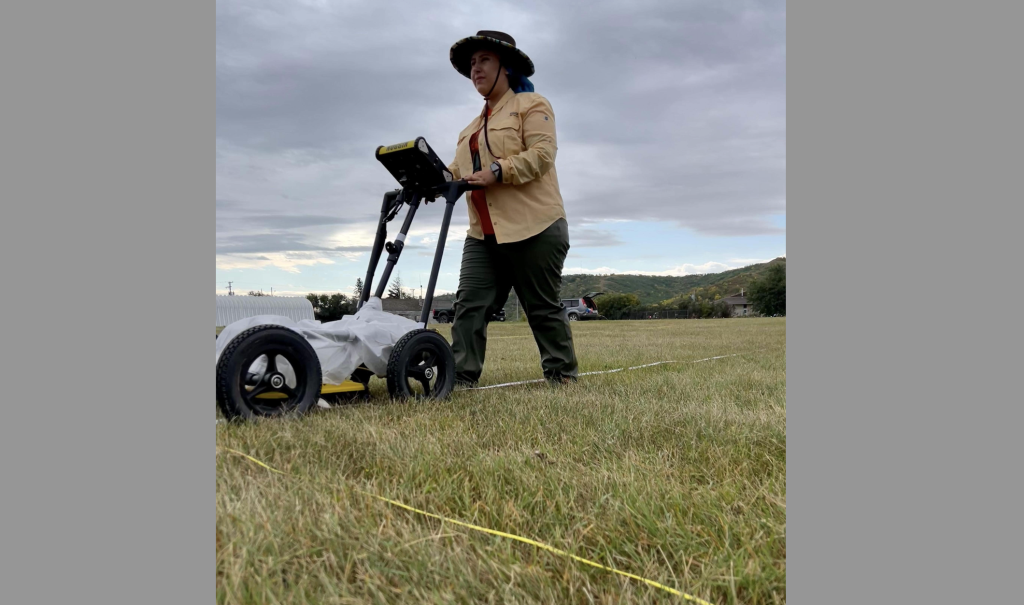
askîhk Research Services use advanced technology, including ground penetrating radar, to locate unmarked burial sites (photo submitted by Micaela Champagne)

“I’m sure I annoyed a bunch of folks by reaching out by this unknown undergraduate kid,” said Champagne.

A desire to work directly with communities without the colonial pressure of publishing findings and research papers is what led Champagne to create askîhk Research Services.

Now, as the recipients of $25,000 from the SOAR pitch competition to invest into their company, askîhk plans to put the money towards more advanced technology, including a drone-mounted lidar, which can help them narrow down search areas for missing burials in areas that are heavily wooded and not accessible for other technologies.

As they advance askîhk Research Services, Champagne said she hopes to help non-Indigenous Canadians and people around the world to listen and believe in the truth they’re helping to illuminate.

“The reason why this is so important is because I want survivors to know that their truths are being heard,” said Champagne.

“We’re doing the heavy lifting of taking those stories, those truths, and using them to find those children that never came home. And if that’s a sense of validation that people need, that’s great, but there shouldn’t have to be our scientific investigations to prove that these truths happened.”