The Last Generation – Survivors share stories from Canada’s final chapter of residential schools
-
Share on Facebook
-
Share on Bluesky
-
Share on X
- Copy Link
While most residential schools across Canada were shut down in the 1970s and 80s, Saskatchewan was home to the final institutions still operating in the country. Residential schools like Gordon Indian Residential School and Muscowequan Indian Residential School were running through much of the 1990s, leaving a generation of Survivors whose memories are still vivid from one of the darkest chapters in Canadian history.
In an ongoing series, Eagle Feather News is giving space for survivors of the Last Generation to share their experiences at residential school – in their own words.
Part III:
John McDonald – Muskeg Lake Cree Nation
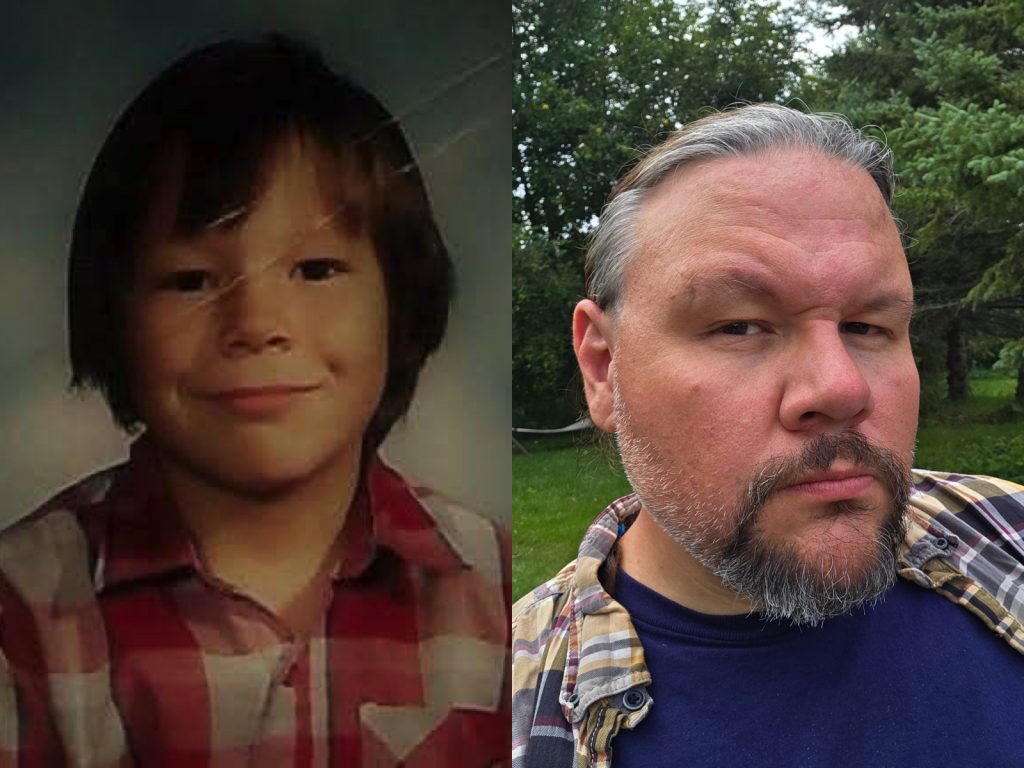
I attended the Prince Albert Indian Student Residence starting in 1984, when I was four years-old at the time. I left in 1989, so I was there from ages four to nine. My parents went to residential school, my grandmother went to residential school, and myself – so three generations.
In the mid to late 1970s, the operations of the school were taken over from the Catholic Church by the Canadian government. And what was decided at the time was to hire Indigenous staff members to work at the school. My father was one of the staff that was hired. The people they hired brought what they learned from their own experiences and employed that with the kids they were looking after.
I lived with my family on the site, we lived in the dorms. My father was a supervisor at the residence in the cottages, so we witnessed what was happening on a daily basis. The same traumas, the same lack of culture, the same hardships that the boys in that dorm, in those cottages, faced.
I remember the constant threat of physical punishment. And a lot of psychological abuse that happened in those places. I remember the boys crying for their moms all the time, constantly hearing that. I remember the itchy pyjamas that all the boys were issued and forced to wear. I remember the fear the boys had who wet the bed, because they were going to get a licking for wetting the bed.
I remember on my first day I said the word ‘Kookum’ and my teacher spinning me around in my chair, and with that coffee breath, gave me shit and told me, ‘you’re not to talk that gibberish in my classroom. You talk right.’
There were many, many times were were made to feel less than. If you spoke your language, you spent recess with your head down on your desk. But in the same vein, if it hadn’t rained in some time, the teachers would come up to you and say, ‘why don’t you do a little rain dance?’. You had it instilled in you that your culture is not something to be proud of, but to be mocked.
From a young age, I learned to walk on eggshells. To be mindful of the belt when it came out. I was so young, that at the time I internalized so much of it, and just bottled it up. Later on in life, it led to my own battles with substance abuse.
My father was a very violent man. He was very verbally abusive. Very quick to yell, very quick to hit. For a very long time I held a lot of hatred toward that man. One year after (we left residential school) he committed suicide. It’s only been in the last couple of years that it dawned on me that he was the product of what he grew up with in the residential school system. He was never taught how to be a parent, or even a loving person.
When they talk about residential schools in the media, they’re always showing black and white photos from the 40s and 50s. But the last residential school closed in 98. When I got out of residential school, The Simpsons just started. The biggest bands in the world were the Spice Girls, Backstreet Boys, and NSYNC.
For those of us who survived residential school in the 80s and 90s, when we’re comfortable enough to share our stories, there were certain survivors who would say, ‘you didn’t have it as hard as us. You weren’t taken from your family, your community.’ We hear that we’re not ‘real survivors’. That’s something we face quite a bit as the last generation of survivors.
It makes you have this constant imposter guilt, or imposter syndrome. You are told your experiences don’t really count. When they were doing the TRC inquiries, I was denied to talk. And I remember the quote was, ‘if it didn’t involve a priest or nun, we don’t want to hear about it.’
So many of those from my generation, the last generation, don’t see themselves as survivors. But trauma is trauma. It’s not a competition of who had it worse. We are among the last generation to have firsthand knowledge of what happened in those walls. And it’s something I take very seriously.
It’s also something that scares me because we are losing World War II veterans who experienced the horrors and were firsthand witnesses to what the fascism, Nazism, and tyranny can do to a civilization. It’s no coincidence that the rise in right-wing extremism is happening at the same time we’re losing so many of those people who kept it at bay and reminded us of what they fought for.
So that’s something I take very seriously. I’m an advocate for those who either aren’t ready to talk yet, or are no longer here to talk for themselves.
And one thing that chills me to the bone is that residential schools never really closed. They just changed the name. They just called it Child Family Services now. We have more kids in care now than we had at the height of the residential school system. And there are still young people, young Indigenous people, being taken from their homes and experiencing the loss of family and connection.