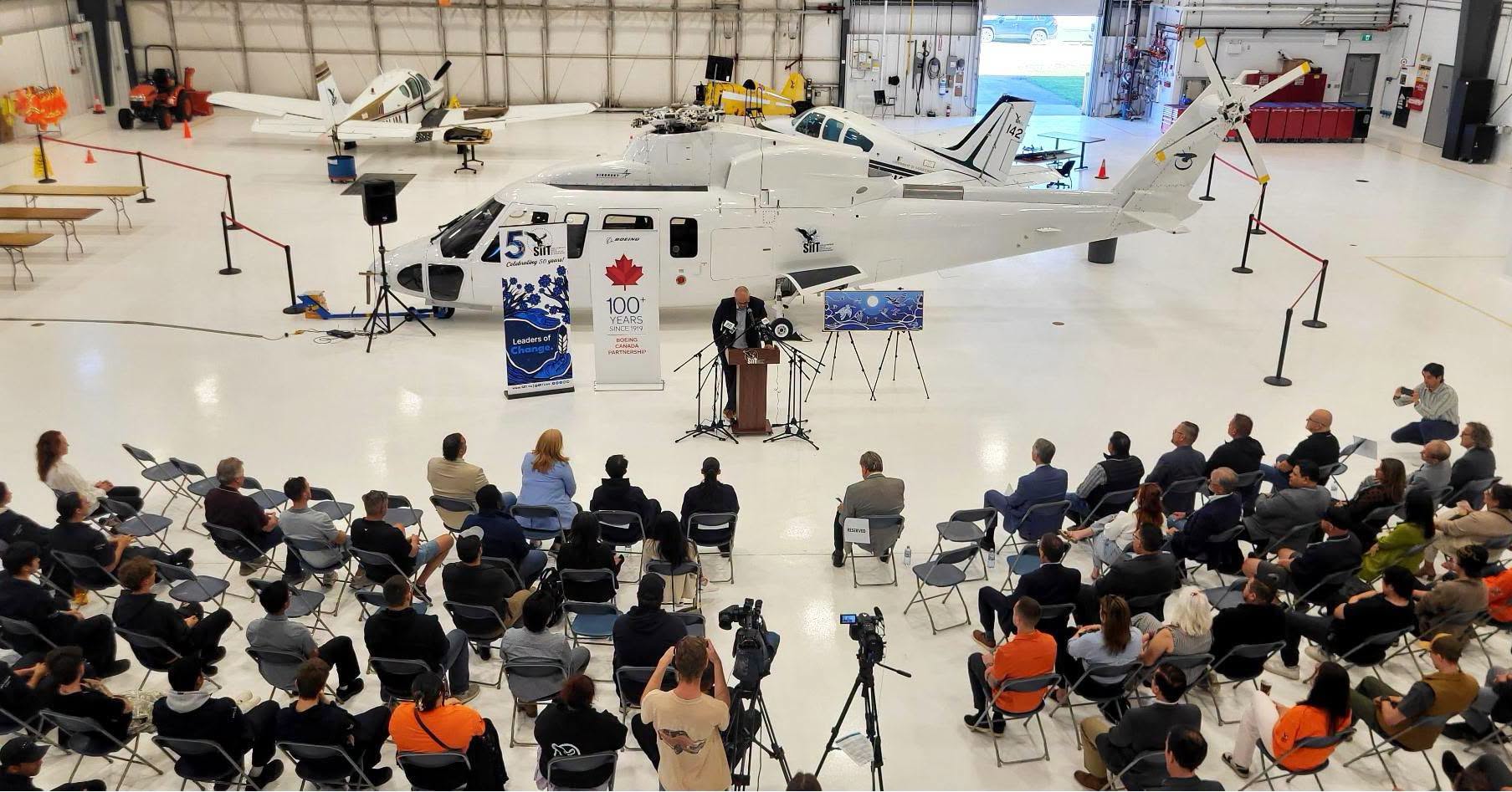
$17 million investment from Boeing to expand aviation opportunities for Indigenous students
-
Share on Facebook
-
Share on Bluesky
-
Share on X
- Copy Link
A massive investment from Boeing is helping expand aviation industry opportunities for Indigenous students in the Prairies.
The Saskatchewan Indian Institute of Technologies (SIIT) recently received a $17 million donation from American aircraft company Boeing in an ongoing relationship that has gone on for more than 15 years.
The investment marked the grand opening of the Saskatchewan Aviation Learning Centre in Saskatoon, which entails modern classrooms, a specialized avionics laboratory, and additional hands-on training spaces designed to prepare students for careers in aircraft maintenance and aerospace technology.
“We know that people want to have highly paid, highly qualified jobs in their home communities, and this program is going to support that. That’s why this is so important,” said Dr. Victoria Drover, Vice President of Academics at SIIT.
“As our President Riel Bellegarde always reminds us – we are the community’s college. Our programs are designed to respond to the economic development and community needs of our First Nations,” said Drover.
SIIT’s aircraft maintenance engineering offers three Transport Canada-approved, two-year program streams: Mechanical (AMEM), introduced in 2010, focuses on aircraft and helicopter engines; Avionics/Electronics (AMEE) newly introduced program focusing on aircraft and helicopter computer systems and electronics; and Structures (AME-S) focusing on aircraft structure, including wings and fuselage, as well as repair of damage.
“Historically, we’ve had in intake of 18 students in our AMEM license,” said Drover. “Between year one and students going to year two, there were 36 students on site. Now, we have another program with an 18 student intake – so by the end of next year when we have our AMEE and AMEME licenses up and running, we’ll have over 120 students in that facility.”
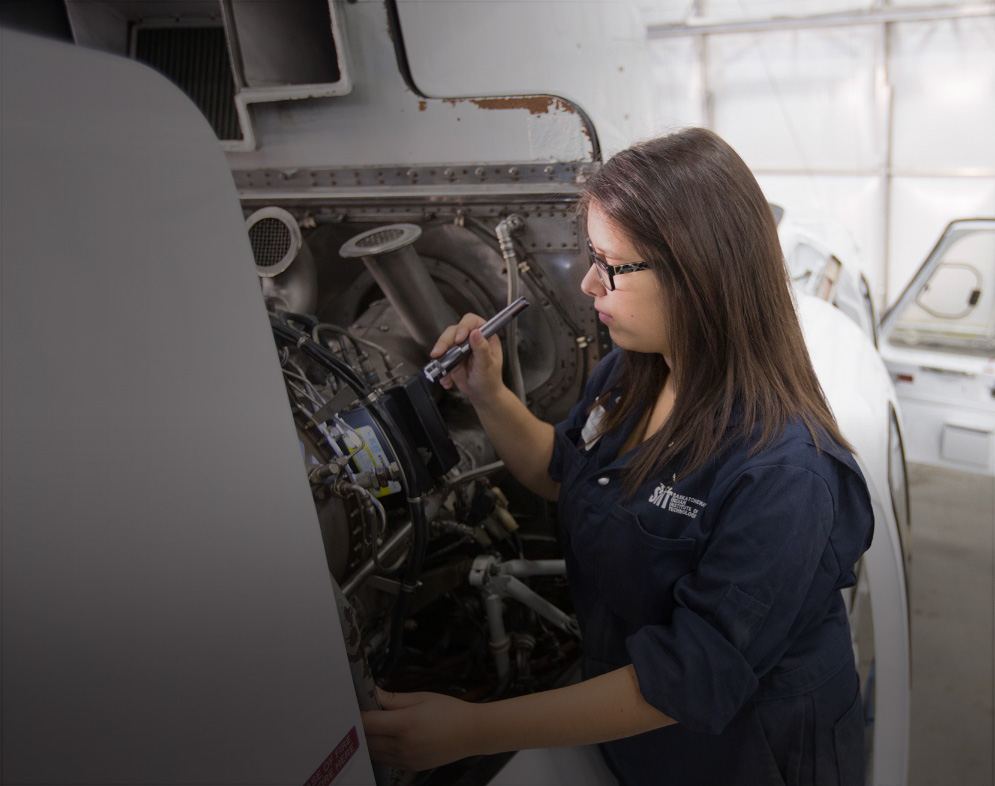
Boeing is also supporting an AME prep program, an eight-week course which helps students who have completed their grade 12 but are struggling with the math required fro the AMEE program.
Drover said that these sort of investments from the private sector often come with expectations that graduates become employees. Boeing has no such expectation, she said.
“They are looking to just create capacity and diversification of aircraft maintenance engineers,” said Drover. “That means that these graduates are going to be supporting their communities, supporting rural, remote and Indigenous providers here in Saskatchewan.”
Drover said that not only is there a huge demand from northern communities for safe transportation routes, but in Canada, the average age of an AME is 55 years-old.
“We’re going to see huge retirements in the next 10 to 15 years, and we need to ensure that we have those technicians available so transportation routes are maintained in our communities. The demand is not going away,” said Drover.
For its next intake of students, Drover said SIIT currently has well-over 100 students on a waiting list for 18 spots.
She said the school is currently working with federal and provincial governments, as well as the private sector, to explore duplicating this program in the south of the province within the next five years.
“We need to ensure that Indigenous people are leading innovation in these spaces,” said Drover.
“We’ve had 10 years of community members going back home and talking about how cool of a job it is. How it really supports the work-life balance. And so we’re really seeing a lot of students wanting to take our AME program.”