Feds invest $141 million to increase internet connectivity in rural and remote Saskatchewan
-
Share on Facebook
-
Share on Bluesky
-
Share on X
- Copy Link
The federal government is making a major investment to increase connectivity in Saskatchewan.
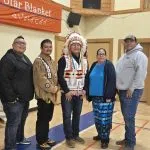
Announced on July 24 by Buckley Belanger, Secretary of State for Rural Development and former Mayor of northern community Île-à-la-Crosse, the federal government are investing over $141 million for six projects to bring high-speed internet across Saskatchewan.
The investment will reportedly bring high-speed internet to more than 30,000 households in over 500 rural and remote communities across Saskatchewan.
“High speed internet is no longer just a luxury – it’s essential infrastructure, no matter where you live in Canada,” said Belanger in a statement.
“It’s how people access health care virtually, start a business, or just stay in touch with their loved ones.”
In 2017, only 45 percent of Saskatchewan households had access to high speed internet. Currently, 89 percent of Saskatchewan households have access to high speed internet. By the end of 2026, the federal government plans to make that number 92 percent.
Communities to benefit include Peepeekisis Cree Nation, Wahpeton Dakota Nation, Ahtahkakoop Cree Nation, Muskeg Lake Cree Nation, Muskoday First Nation, Pasqua First Nation, Ocean Man First Nation, and Big River First Nation, to name a few.
Belanger said the federal government aims to provide 100 percent of Canadian households with high speed internet access by 2030.

The funding for the investment is provided through the Universal Broadband Fund, a program designed to ensure rural, remote, and Indigenous communities have reliable access to high speed internet. The Canada Infrastructure Bank has committed more than $2 billion towards digital infrastructure.
“In many rural and remote areas, connectivity projects like these face a number of financial and structural barriers. Federal tools like the Canada Infrastructure Bank help bridge that gap,” said Gregor Robertson, Minister of Housing and Infrastructure.
“By supporting initiatives like this, we are advancing economic growth today and helping close the connectivity gap for underserved communities well into the future,” he said.
For those living in northern and remote Saskatchewan communities, a ‘digital divide’ has been a reality for years, with only a small percentage of remote and northern First Nations having access to high-speed internet due to the vast distances and low population density making building and maintaining infrastructure costly.
According to a Saskatchewan Broadband Action Committee report, many remote locations still depend on satellite links or basic mobile signals rather than stable wired broadband.
Beaver River Broadband, a majority Indigenous owned partnership co-owned by Meadow Lake Tribal Council Resource Development Inc and Wood River Controls Inc, are using the investment to deliver fibre infrastructure directly to Peepeekisis Cree Nation.
“This critical investment guarantees gigabit-capable internet access that will transform local opportunities in digital education, remote health care, and community-led economic development,” said John DeGraauw, cEO of Beaver River Broadband.
“Empowering local providers (…) ensures that underserved First Nations are not just connected but supported by partners invested in their long-term digital sovereignty.”