New cancer support group grounded in Indigenous knowledge and healing
-
Share on Facebook
-
Share on Bluesky
-
Share on X
- Copy Link
A new cancer support group, founded in culture, ceremony, and ancestral knowledge, has been developed and offered to Indigenous cancer patients and families in Saskatchewan.
The Saskatchewan Cancer Agency has created the Indigenous Cancer Support Group, a program that meets every Wednesday at the Pasqua Hospital in Regina. The program is designed to create space for patients, caregivers, and their loved ones to share their experiences while receiving spiritual, mental, emotional, and physical support.
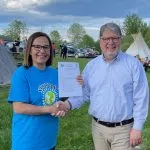
“We were hearing from a lot of patients and families that they wanted something rooted in Indigenous culture,” said Virginia Bird, consultant with Saskatchewan Cancer Agency and creator of the program.
“We heard from patients trying to access cultural supports, caregivers and families needing supports – everything that cancer entails. It’s not just a physical disease, it’s mental and emotional.”
Bird enlisted Métis Elder Darrell Klyne to facilitate the group, who has more than 20 years experience supporting through grief, loss, addictions, and family reunification. Klyne leads each session, guiding the group through topics like caregiver burnout, self-care, emotional processing, and culturally-focused coping.
“We have patients, their children, family members, caregivers, who have lost someone to cancer and are just looking for that outlet,” said Bird.
According to Canadian Cancer Statistics, nearly one in two Canadians will be diagnosed with cancer in their lifetime, and it remains the leading cause of death in the country.
Indigenous populations in Canada face higher incidence of lung, colorectal, kidney, cervical, and liver cancers, as well as a significantly lower 5-year survival rate.

Social determinants such as poverty, higher rates of smoking and obesity, drive many of these cancer types. Additionally, screening uptake, such as mammograms, is generally lower among Indigenous women, often due to lack of culturally appropriate outreach and historical mistrust in the healthcare system, according to the study.
“The group shares their experiences and feelings, often how they have no one to talk to,” said Bird. “We want to make it safe to share these personal experiences.”
The group started in February as the Indigenous Grief and Loss support group, but has changed the name to its current Indigenous Cancer Support Group to broaden its scope of support.
Bird said they have funding from the Cancer Foundation of Saskatchewan to establish support groups in Saskatoon and North Battleford, as well as two part-time Elders in their cancer centres.
The Saskatchewan Cancer Agency is also hiring an Indigenous patient navigator in Saskatoon to support the northern cancer patients, who have additional barriers like travel and language. They are currently working on a First Nation and Métis cancer strategy, which they hope to complete in 2028.
Bird said the feedback they’ve received from the support groups has been positive, with individuals going through grief and loss feeling more supported and connected.
“It’s so important to have that outlet and know there’s a safe place they can access an Elder or a peer network,” said Bird. “Our participants have voiced that they feel connected. People are able to talk about challenges and solutions. It’s creating a safe, supportive place for people.”