Three First Nations sign MOU to address drug crisis
-
Share on Facebook
-
Share on Bluesky
-
Share on X
- Copy Link
Three Saskatchewan First Nations have signed a Memorandum of Understanding (MOU) to address the drug crisis in their home communities.
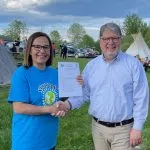
Muscowpetung Saulteaux Nation, Piapot First Nation, and Pasqua First Nation signed an MOU on May 12 to commit to addressing key challenges impact their communities, including substance abuse, gang activity, and emergency preparedness.
“The objective is to have a drug and alcohol free nation for the three of us. We all have the same goal,” said Chief Fabian Ironealge of Pasqua First Nation.
“If you look at the social problems that come with alcohol alone – family and domestic violence, those types of issues would be addressed if people were dealing with their addiction.”
The agreement outlines joint efforts in prevention, intervention, information sharing, and capacity building, while respecting the sovereignty and governance of each nation. It also establishes a Tri-Nation Community Safety Council to guide implementation and ensure community voices, including Elders and youth, remain central to all initiatives.

In his home First Nation of Pasqua, Ironeagle said substances like crystal meth and fentanyl are common issues with some adults in their community, and marijuana with some youth. But, he said in many neighbouring communities, the drug crisis is much more severe.
“With the adults, it’s tough. Some are in their 50s or 60s. You can lead a horse to water. But, more often than not, they choose to continue living that lifestyle no matter what we try,” he said
“With youth, I think the awareness we create has had an impact. We create support them in sports, culture, education – anything positive that we can. We teach the consequences of doing drugs like crystal meth and fentanyl, and I believe that has had an impact on our youth.”
According to Stats Canada, Indigenous youth and adults are disproportionately impacted by the toxic drug crisis. In Saskatchewan, First Nations individuals represented roughly 51 percent of accidental opioid drug deaths.
According to another study from the Saskatoon Tribal Council on alcohol abuse found 23.5 percent of youth on reserve, grade 5-8 abused alcohol, and almost 15 percent used marijuana.
“To me, if we work collectively as three First Nations, sharing a message and having the same thought process, I think there’s a lot we can do for our youth.”