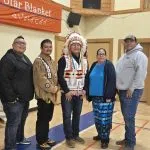
A new initiative at Yorkton's Columbia School gives students unique, out-of-the-classroom educational experiences. (photo: Tashena Asham)
Columbia School Yorkton

Youth on the Land initiative creates special opportunities for entire Yorkton school

May 26, 2026 | 1:26 PM

For many young people, getting outside is the best way to learn.

A study from the National Assessment of Educational Progress found a host of advantages with active, hands-on learning, including boosts in academic performance, memory retention, and mental wellbeing in youth.

Tashena Asham and Taryn Abraham, Indigenous community workers at Columbia School in Yorkton, are more than familiar with these benefits with young people at their school.

This year, Asham and Abraham have created a ‘Youth on the Land’ initiative, which allows students to get out of the classroom and learn traditional teachings and practices on the land. The program, which stretches over three months, involves over 300 students from the school, from pre-kindergarten to grade eight.

“We wanted something very hands-on for our students because a lot of them thrive in that kind of environment rather than being in a classroom setting,” said Asham, a member of Keeseekoose First Nation.

Students tanned hides from moose, elk, deer, and coyote (photo: Tanesha Asham)

“We get the chance to see these kids in their real, true personalities,” added Abraham, who is of Red River Métis heritage. “With this ‘Youth on the Land’ initiative, they’re getting to experience things they otherwise wouldn’t have the chance to. It’s been pretty incredible.”

The initiative kicked off in March with tipi teachings with Jasmine Albert, in which students were able to construct tipis from the ground up, and learn about their history and cultural significance. In April, land-based educators Garrick Schmidt and Megan Anishinabie took students through a host of traditional practices, from fire starting to skinning and hide tanning, to meat smoking.

Some of the students even surprised the instructors with their enthusiasm.

We made a traditional brain tanning solution using moose brain soup,” said Abraham. “Some of the students said they wanted to eat the soup. (They did not).

At the end of May, the hungry students will be treated to the feast they’re looking for. On the 29th, the initiative is winding up with a large dinner, where the boys will help serve and the girls will help with meal preparation. The meal will be shared with the entire school.

Taryn Abraham (left) and Tashena Asham (right), Indigenous community workers at Columbia School

We’ve had such a great response from the students themselves. After our two-day land education with Megan and Garrick, the kids were all together, cheering each other on. It was great to see that fellowship and community building in our school,” said Abraham.

Columbia School in Yorkton have a diverse student population, including many students who come from neighbouring First Nations, as well as students who have been through the Ministry of Social Services or emergency receiving homes, said Asham. A simple experience like spending a day in nature might be a novelty for some.

We want to create a space for them where they feel like they’re valued and have the ability to express themselves,” said Asham. “We want to connect them with that cultural part of themselves and let them know they’re supported and welcome here.”

Land-based educators Garrick Schmidt and Megan Anishinabie spent two days with the students (photo: Tanesha Asham)

The student body and Columbia School is about 50 percent Indigenous. The Youth on the Land initiative has not only been enriching for Indigenous students, but has created more understanding and unity with the non-Indigenous students, they said.

We’ve had our non-Indigenous students get in there, roll up their sleeves and help flesh a coyote. A lot of them asked to stay later to help,” said Abraham. “The relationship building amongst one another has been moving to see. How just a couple days of being outside together can build that sense of community.”

Students also learned to start and keep fires, and to smoke fresh meat (photo: Tanesha Asham)

The three-month initiative was funded with grants and support from SaskEnergy, Yorkton Indigenous Friendship Centre, SIGA, Co-op, and the Comprehensive School Community Health Fund. Asham and Abraham said that they hope next year the initiative can not only be continued, but extended throughout the entire school-year.

What we always stress here is Reconciliation in action. We’re actually seeing that in full force here, and how all students are part of an inclusive environment,” said Asham. “It’s creating real opportunities.”