New Coalition Brings Vital Support for Indigenous Workers
-
Share on Facebook
-
Share on Bluesky
-
Share on X
- Copy Link
An Indigenous-led organization for Indigenous workers is strengthening workplace safety for First Nations, Inuit, and Métis communities.
A coalition of Indigenous-led organizations announced in January a unified initiative to advance occupational health, research, safety, and compensation rights for Indigenous workers across Canada.
“The impact it will have is unprecedented in First Nations history, that’s how big of an impact it is,” Grand Chief Toby Desnomie told Eagle Feather News.
“There’s been a gap there for 150 years. If you don’t have safety as a pillar to your nation, you don’t have a nation,” he said.
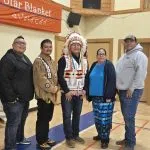
Desnomie is the CEO of the Indigenous Centre of Occupational Health and Public Safety (ICOHPS) and the newly-appointed Grand Chief of the Confederation of Indigenous Workers (COIW) – a coalition of three organizations working together to protect Indigenous workers.
“Occupational Health and Safety (OHS) is not federally funded. That’s a big deal because every municipality, every province, every federal district have OHS except for First Nations or Indigenous people. That’s a big gap in the system of safety,” said Desnomie.
“The cause and effect is safe communities – understanding what the risks are in those communities that aren’t being mitigated.”
Desnomie said work-related injuries can be complicated for workers and families, with gaps in coverage often not supporting injury rehabilitation in getting back to work, or families who might be left without an income due to an injury. COIW was established to provide solutions to those problems.
“That’s what the Indigenous Workers Compensation looks at. Not only the organization, but the impacts it has within the community – mental health, community wellness and security, and community competency,” said Desnomie.
“We take a holistic approach. Not only do we teach and advocate for the First Nation with respect to the federal law, but we also do it according to our own hereditary law.”

The three founding organizations of the COIW are:
ICOHPS, a national organization that develops public safety awareness education programs and safety management systems;
the National Indigenous Research Council for Occupational Health and Safety, a non-profit advancing Indigenous-led research to strengthen workplace health and safety;
and the Indigenous Workers Compensation Board, which supports workers through fair and culturally grounded supports and recovery.
Desnomie said they are committed to closing socio-economic gaps and eliminating barriers through collective work of their founding organizations. He said all the organizations actuation are guided by Indigenous laws and worldviews to serve all Inuit and Métis communities, and all 634 First Nations in Canada.
Desmonie said that reaction to the newly formed coalition and the gaps it will fill, has been notable.
“There’s astonishment that the system hasn’t been known to them. Then awareness kicks in, and responsibility,” said Desmonie. “And once that kicks in, they start to look for justification and for who is responsible.”