Saskatoon Police Board Re-Appoints Indigenous Commissioners, Maintain Community-Focused Policing
-
Share on Facebook
-
Share on Bluesky
-
Share on X
- Copy Link
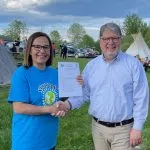
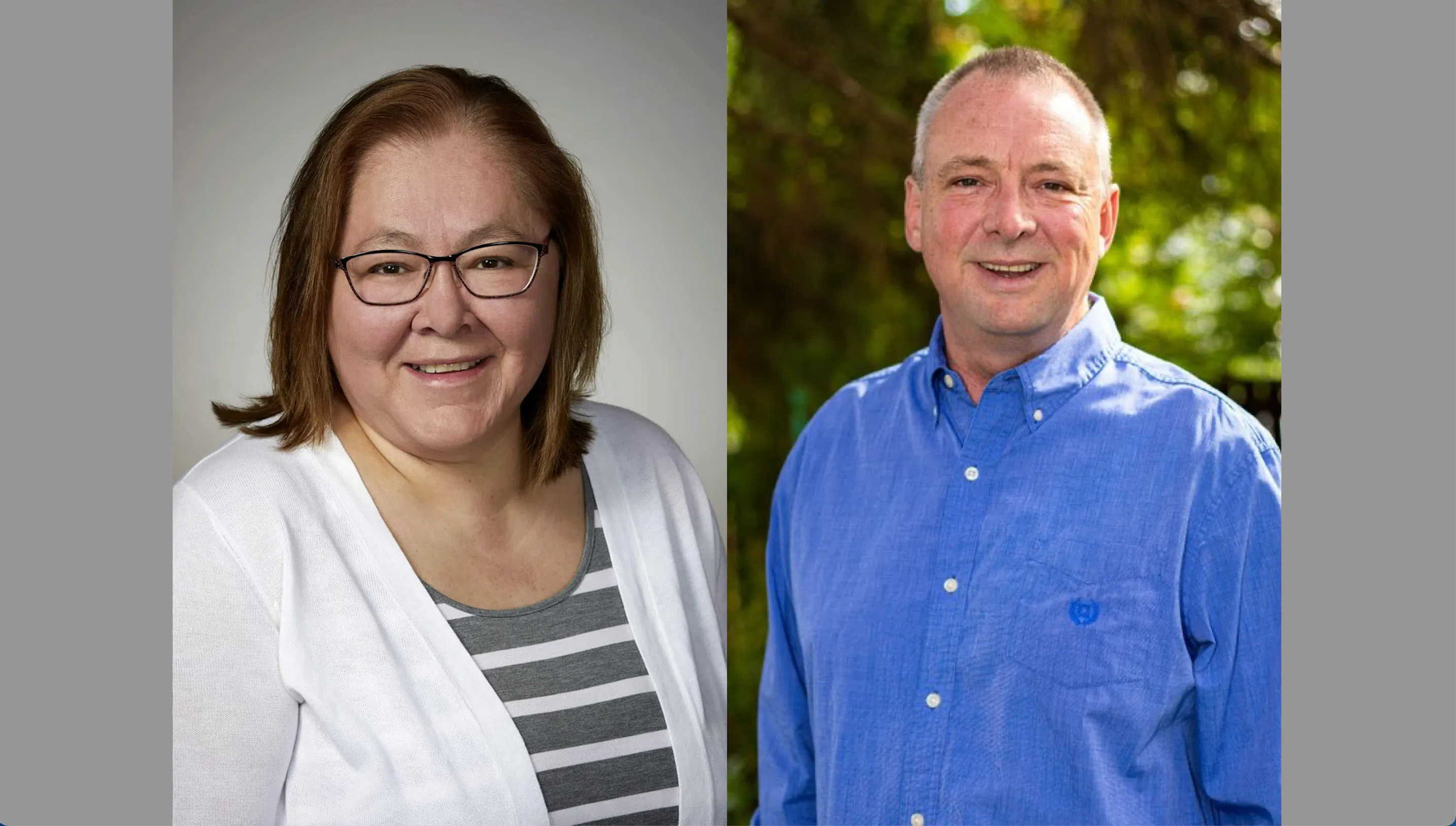
Two Indigenous Commissioners have been re-appointed to the Saskatoon Board of Police Commissioners.
On January 22, Shirley Greyeyes was re-appointed as Chair of the Saskatoon Board of Police Commissioners, and John Lagimodiere as Vice-Chair, each for a third one year term.
Also re-appointed to the board are Mayor Cynthia Block, Councillors Zach Jeffries and Senos Timon, as well as Katharine Grier and Jenelyn Santos Ong.
“One of the things we want to the community to understand is that the safety and their well-being is extremely important to us,” said Greyeyes, a member of Muskeg Lake Cree Nation.
“We also think it’s important for (the police) to be visible in the community, and connected to the community. So that people know they’re people too.”
Greyeyes said she got into volunteering with policing because she didn’t like what she was hearing about police and the community. She graduated from the SPS Community Police Academy, and initiated the only police academy held at the White Buffalo Youth Lodge, which she used to run.
She is also Board Chair for the Canadian Association of Police Governance, and director of the Dakota Dunes Community Development Corporation.
“Being on the police commission is not a once a month responsibility. It’s a daily responsibility,” said Greyeyes.
“The decisions we make are extremely important for our community. We bring life experiences, we bring everything are continuously learning, our education, our knowledge, to this commission.”
Lagimodiere, a Métis entrepreneur, is the owner of ACS Aboriginal Consulting Services, a member of the Métis Nation-Saskatchewan, and the former editor and publisher of Eagle Feather News.
“We’re in the community a lot, so we hear directly from the community on what their issues and concerns are,” said Lagimodiere.
As members of the police commissioners, Greyeyes and Lagimodiere have regular meetings with the Chief of Police and various committees and groups, as well as training ten times a year. Additionally, they meet with various units, including the Guns and Gangs unit, the Domestic Violence unit, and participate in ride alongs.
Lagimodiere said the role requires them to have thorough insights from both sides of law enforcement.
“We have to be both. We have to be accountable to the community and provide safety, but also be accountable to the police service, and provide them with the resources to put them in the best position to do their job well,” said Lagimodiere.
After consulting with the community in 2025, some of the most common concerns in Saskatoon were the public feeling unsafe, particularly in public spaces, due to the prevalence of drugs, weapons, gangs, and social disorder. Citizens polled in the study said police presence and specialized units that allow for relationship building increase the public’s perception of safety.
“It’s no secret that in Saskatoon, there’s an issue around social disorder. To address the social disorder, the police have to be visible, and connected with the community,” said Lagimodiere.
The Alternative Resources Officers (ARO), who wear official uniforms but don’t carry guns, are visible in areas like downtown, Riversdale, Pleasant Hill, said Lagimodiere.
“It allows them to build relationship when they’re walking around downtown – not just with the business owners but the folks that are hanging around with no where else do go.”
“We want police to be proactive even though they have to be reactive,” added Greyeyes. “I think it’s extremely important for them to be connected with the community, so they’re aware that they’re there to help them.”
In October of 2025, a point-in-time count revealed 1,931 individuals in Saskatoon experiencing homelessness, representing a significant 29 percent increase over the previous year.
In addressing concerns related to the growing number of vulnerable individuals in the city, Greyeyes and Lagimodiere point to the Police and Crisis team (PAC), who work with Saskatoon Crisis Intervention Service, to attend to calls when there is a mental illness or addiction concern.
“They’re able to streamline and coordinate access to community resources, and divert mental health and addictions away from the justice system. They don’t want them going to jail because they’re having an issue – they want to get help,” said Greyeyes.
In 2024, the PAC team diverted 216 individuals away from the emergency, and 47 from detention, said Greyeyes.
They also referenced the Saskatoon HUB as a positive initiative, in which several agencies across the province coordinate resources to address situations facing individuals or families with elevated risk factors. According to their website, it connects more than 100 citizens and families each year to services.
“Instead of the old law and order, it’s about building relationships and helping folks find services they need. We do that with the AROs, the HUB, and the PAC crisis team, who have been brilliant,” said Lagimodiere.
Saskatoon has among the highest homicide rates in the country, and is tied for 7th among Canadian census metropolitan areas for the highest Crime Severity Index in 2024.
Concurrently, Saskatoon is one of Canada’s fastest growing cities, with an average of two percent national growth over the past decade, with a population estimated to be over 350,000. Saskatoon’s population in 2021, according to the national census, was 266,141.
“We’ve been under (policed) for quite some time,” said Greyeyes. “With the growth rate, we do not have enough police officers. The provincial government announced funding for a number of positions last year, but the training only accommodates so many.”
In 2026, they will be adding 24 new, entry-level constable positions in Saskatoon, and 34 in 2027.
“That’s where we need help. We have one of the lowest police officers per 100,000 people in Western Canada. We have some catching up to do there,” said Lagimodiere.
The last two groups of police hires in Saskatoon have gone through a five-day Indigenous awareness seminar on Indigenous history and culture, residential schools and survivors, and cultural protocols.
“They are going to do this with every new batch of hires they get,” said Lagimodiere. “When you understand, when you have the knowledge and empathy, it makes you a better police officer.”