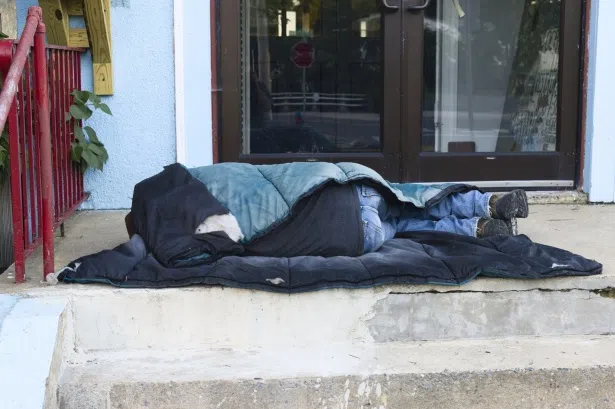
Regina sees small drop in homelessness, shelters still at capacity.
-
Share on Facebook
-
Share on Bluesky
-
Share on X
- Copy Link
Regina’s point-in-time (PIT) count found a decreases in the number of individuals experiencing homelessness. But shelters and service providers aren’t satisfied with the small drop in numbers.
The most recent PIT count, conducted by Namerind Housing Corporation in December, found 767 individuals in Regina experiencing homelessness. The 2024 count found 824 individuals experiencing homelessness.
“It’s a large issue in our city right now,” said Dave Slater, manager of community wellbeing at the City of Regina.
“At the end of the day, I see the number of 767 individuals that were counted as homeless on a given night. That’s a huge number. We’re not coming to any conclusions from seeing that number go down,” said Slater.
The drop in numbers halts an ongoing trend since 2015 of growing PIT count numbers in Regina. In 2015, there were 236 individuals experiencing homelessness, and in 2021, that number was 488.
“I’m obviously pleased to see that the number didn’t substantially go up. Our trends over the last ten years were significant jumps, so we’re pleased to see there wasn’t a big jump,” said Slater. “However, 767 is not a great number.”
During a particularly harsh cold snap in January, the city of Regina contracted a mobile warming bus to take individuals to the three warming centres, or simply provide a warm place for them to sit. The bus saw roughly 100 unique individuals per night, and over 600 during the week it operated.
“We knew we needed to make a decision – we were hearing from the warming centres that they were feeling more pressure when the weather got colder,” said Slater.
The warming bus is not currently operating, but Slater said it’s something they could revisit if the weather becomes extreme again.
Slater said support from the provincial and federal government has been vital in funding the non-profit organizations who do the work. He cites the $1 million from the City of Regina, and the federal government constructing Horse Dance Lodge, a rapid-housing initiative that creates 29 multi-family units. He said when municipalities, provinces, and federal governments get on the same page, more results occur.
“That needs to happen more. We need to keep that momentum going,” said Slater.
The Seven Fires Warming Centre is another new support in Regina this winter for vulnerable individuals. The shelter, operated by Nēwo-Yōtina Friendship Centre, located on 11th Avenue and opened this January, provides relief from the cold, food, hot drinks, and winter clothing.
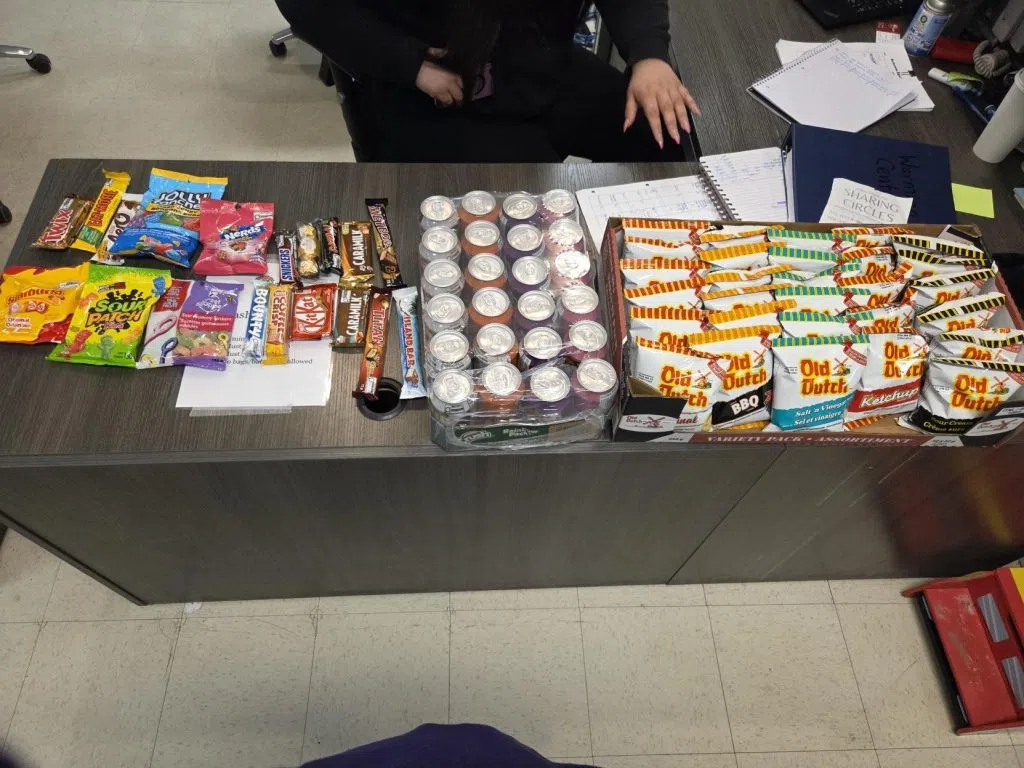
The need for the space was evident from the moment they opened their doors, said Teresa Innis, executive director of Nēwo-Yōtina Friendship Centre.
“It has exceeded our expectations in terms of the number of people accessing our services. We’re seeing well over 100 people over the course of an evening and overnight,” said Innis.
Innis said the warming centre, which can accommodate 25 people, is often at capacity. Their busiest night thus far saw 158 unique individuals through their doors. Innis said they manage crowds by encouraging people to take breaks, or seek shelter at one of the other facilities.
“We’re trying not to jam everyone in there, but when it’s -50, we’re exploring every option to keep people warm,” said Innis.
“We’re seeing families in need of support as well, not just individuals. Which we’re finding concerning as well. It speaks to the broader housing crisis in the city and province.”
The shelter had 3,250 visits in January. Of those individuals, 73 percent self identified as Indigenous. They also saw 30 individuals aged 17 or lower during the month, and 88 individuals who were 55 years of age or older.
She said she believes Regina has come a long way in the last few years, with more resources committed to shelter, warming space, and supportive housing programs.
But without more funding for supportive, transitional, low barrier, and permanent housing, they will continue to see high numbers of homeless individuals in Regina.
“At its core, it’s a housing issue. When people can’t access safe, affordable housing, that makes everything harder. They can’t work on stability, wellbeing, health, employment if they’re not housed,” said Innis.
“The warming centres and shelters in general are great, but in the long term we need more permanent supportive housing and affordable housing.”