Remarkable career of writer Michelle Good honoured with Order of Canada
-
Share on Facebook
-
Share on Bluesky
-
Share on X
- Copy Link
Every once in a while, a debut novel comes out that doesn’t just make a splash, but produces a tidal wave.
Joseph Heller’s 1961 debut novel Catch-22 is widely regarded as one of the most significant novels of the 20th Century. The Edible Woman in 1969 launched the writing career of Canadian great Margaret Atwood. And White Tiger, the first novel by Indian writer Aravind Adiga, written in just 40 days, won the prestigious Booker Prize in 2008.
Saskatchewan-born, Cree writer Michelle Good can lay claim to those ranks with her massively successful, best-selling debut novel, Five Little Indians. The book, which tells the story of five survivors of Canada’s Residential School system, has garnered several awards, including a Governor General’s Award, HarperCollins Best New Fiction Prize, and best book of the 2022 Canada Reads. It has sold hundreds of thousands of copies, and even has an uncommonly high rating on popular book-review site, GoodReads.
“No one was more surprised than me at the response. I really felt it would be a niche book for a niche audience. And then it went insane,” Good tells Eagle Feather News.
“It’s really humbling. Because this was my whole point – to have people look at this subject from a different perspective, and they did. How often do dreams like this come true in a person’s life?”
A dream that Good couldn’t have anticipated was her newest distinction. This January, Good, a member of Red Pheasant Cree Nation, was named one of 80 appointees to the Order of Canada – the highest civilian honour in the nation. She is one of only two recipients this year from Saskatchewan.
“To say I was surprised is a profound understatement. I was completely gobsmacked, amazed, and humbled,” she said.
“Anything that comes from the government, I’m very hesitant to accept because that’s our colonial government. But with this, I felt I was able to accept because of the (Order of Canada motto) ‘they desire a better country.’ I desire a better country as it pertains to Indigenous people, and will continue to work towards that as long as I can.”
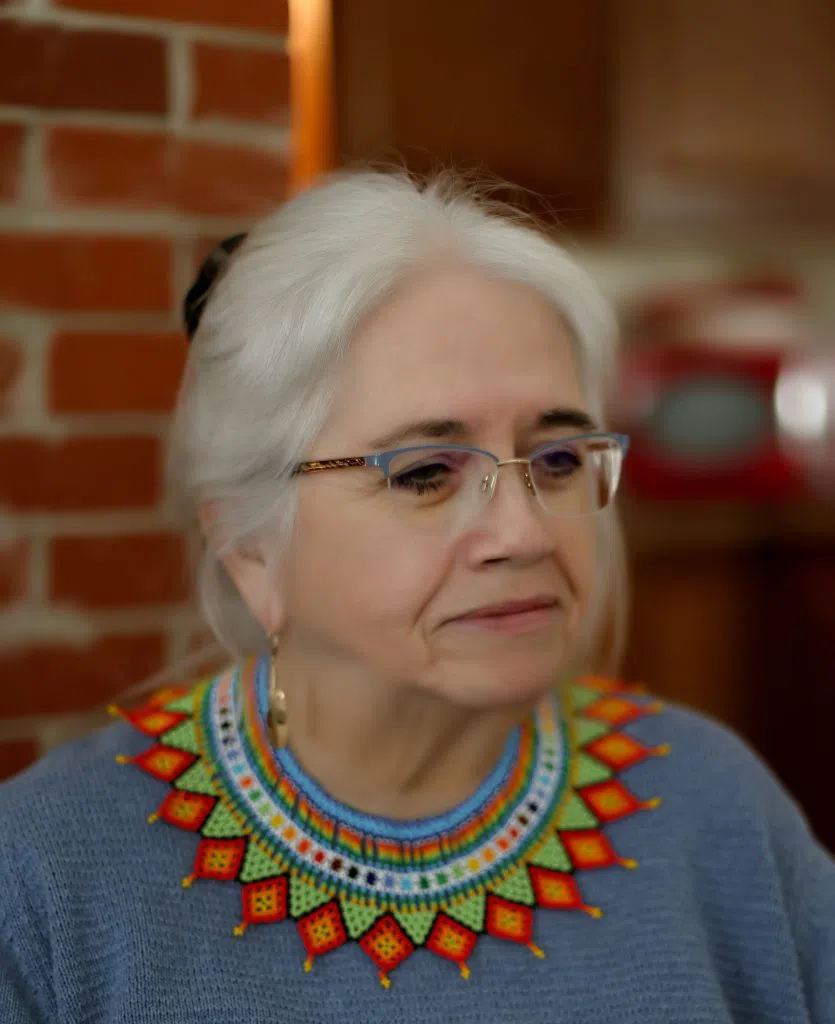
One of the many remarkable things about Good’s success is that she didn’t make her mark as a writer until well into her 60s.
Growing up, Good describes herself as an ‘odd, idiosyncratic’ little child who was always jotting down thoughts and observations in a black notebook. The compulsion to write, she said, was always within her.
“I think it’s a disposition writers have, to observe, consider, and record. I think I’ve always had it, it just took some time to get me to a place where I could do it.”
Good was taken during the 60s Scoop as a child, and lived in foster care in British Columbia for much of her youth. By happenstance, when she was 18, she was introduced to Chief George Manuel, notable leader of the National Indian Brotherhood (known today as the Assembly of First Nations) and the Union of BC Indian Chiefs.(UBCIC)
Inspired by his impassioned speeches on land and environment, and fuelled by her own youthful ambition, one day Good planted herself in the UBCIC office for many hours until his son Chief Bobby Manuel was able to see her. The persistence resulted in a job.
“My naivete was so humorous,” she said. “I was going to Langara College at the time, taking psychology courses. (Manuel) Bobby hired me to write a paper about child development in the context of what Residential Schools have done to children. That was the beginning.”
For the next two decades, Good worked with local, regional, and national Indigenous organizations. At 40, as a single mom, she decided to go to law school at the University of British Columbia. She graduated at 43 with the highest marks in the Aboriginal Law program.
From there, Good ended up with a small law firm in Vancouver, representing survivors of Residential School. She eventually started her own law firm, where she continued to work with survivors over the next 14 years. It was during this time that the seeds of Five Little Indians were beginning to sprout.
“It was my work with survivors that brought me to the point of writing that book,” she said.
“You would see all over the media, and still see it sometimes today, this question of ‘why can’t they just get over it?’ Almost every survivor I worked with would say that they forgive, but they still have to go through this process to be heard. I was observing this phenomenon of phenomenal people and I was so infuriated. I decided, if you want to know why they can’t get over it, I’ll tell you.”
Good was accepted into the Masters of Fine Arts program at UBC as a distance student, and began working on her first novel while running her law firm. For nine years, Good worked on Five Little Indians.