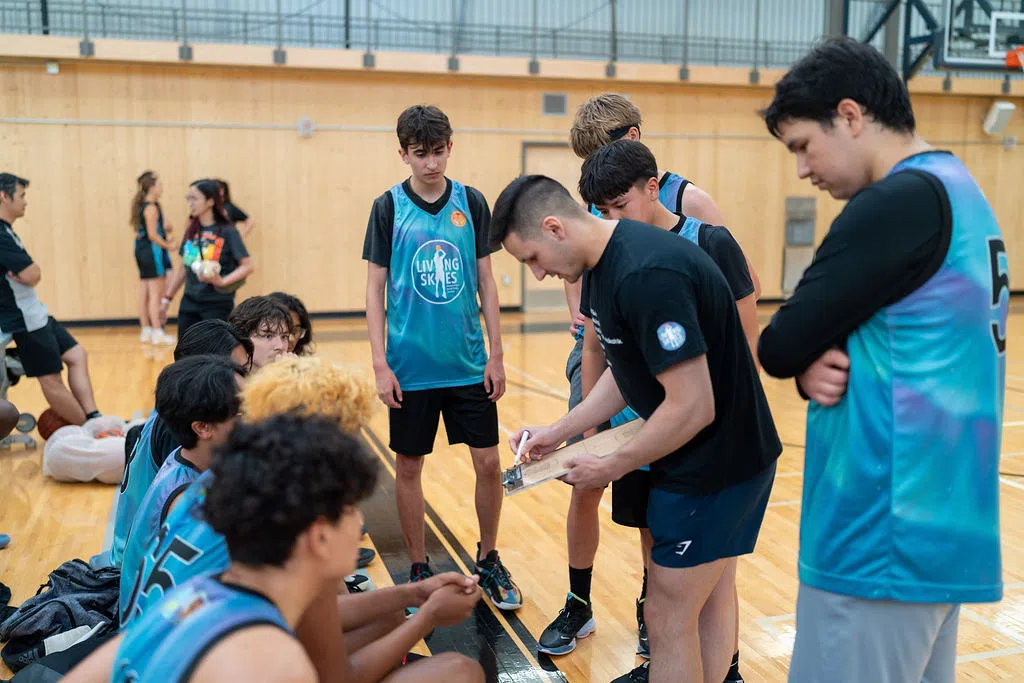
Living Skies Indigenous Basketball League started in 2021. (photo: AFCS)
Living Skies Indigenous Basketball

Indigenous Basketball League Supports Thousands of Youth

Jan 21, 2026 | 11:20 AM

In Canada, the cost to put a young athlete through a year of hockey can range from $800 to over $10,000, with the average cost of $4,478 per child. Football can be as low as $250 for competitive flag football, and over $10,000 for full-contact competitive travel teams. Similarly, soccer can range from a few hundred to thousands for elite level leagues.

To play in the Living Skies Indigenous Basketball League (LSIBL), the cost for players, including travel, accommodation, jerseys, and court time, is $0.

This dream was made a reality by Mike Tanton, co-founder and former chef de mission of the North American Indigenous Games (NAIG), who wanted to create a barrier-free league for youth basketball players in Saskatchewan.

We wanted to create something that ensured kids weren’t dropping out and we were eliminating the barriers to participation,” said Tanton.

(In other leagues), I noticed there wasn’t a lot of effort put into the inclusion portion. Kids that would show up late or miss a practice because they didn’t have a ride might be penalized for that. Those kids might stop coming if they feel they’re not part of the team.”
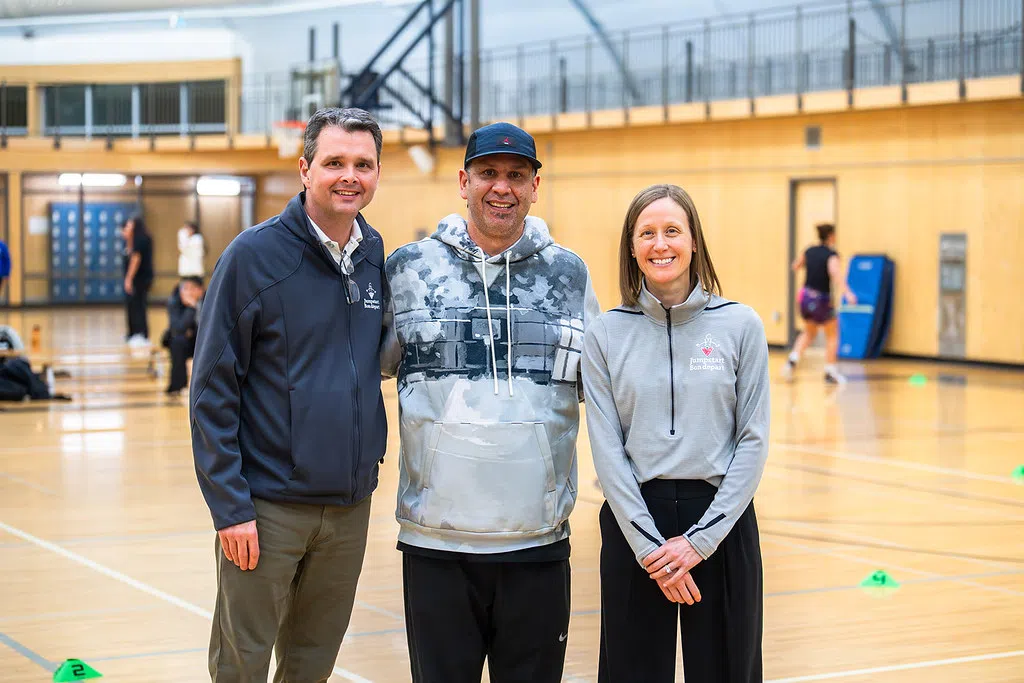
Mike Tanton (centre) co-founder of LSIBL (photo: AFCS)

The idea for a barrier-free basketball league has caught fire. Since launching in 2021, the LSIBL has supported over 3,800 youth aged 10-18 in their league and 120 coaches trained in their coaching program.

The league contains North, Central, and South divisions, with teams located in: Saskatoon, Regina, Prince Albert, Yorkton, Fort Qu’Appelle, North Battleford, La Loche, Meadow Lake, Île-à-la-Crosse, La Ronge, Cumberland House, Onion Lake, and several other small reserve communities.

It’s continuing to grow,” said Paige Crozen, LSIBL Manager.

We found that there’s a need for a basketball program that created a safe environment for Indigenous youth, was culturally grounded, offered transportation, and built capacity within communities.”

Thanks to funding through sponsorships, grants, donations, and partnerships with organizations like Aboriginal Friendship Centres of Saskatchewan (AFCS), University of Saskatchewan, University of Regina, Canada Basketball, and Basketball Saskatchewan Inc., LGIBL has been able to pay for all necessary basketball expenses, including travel and accommodations for teams to participate in divisional and provincial tournaments.
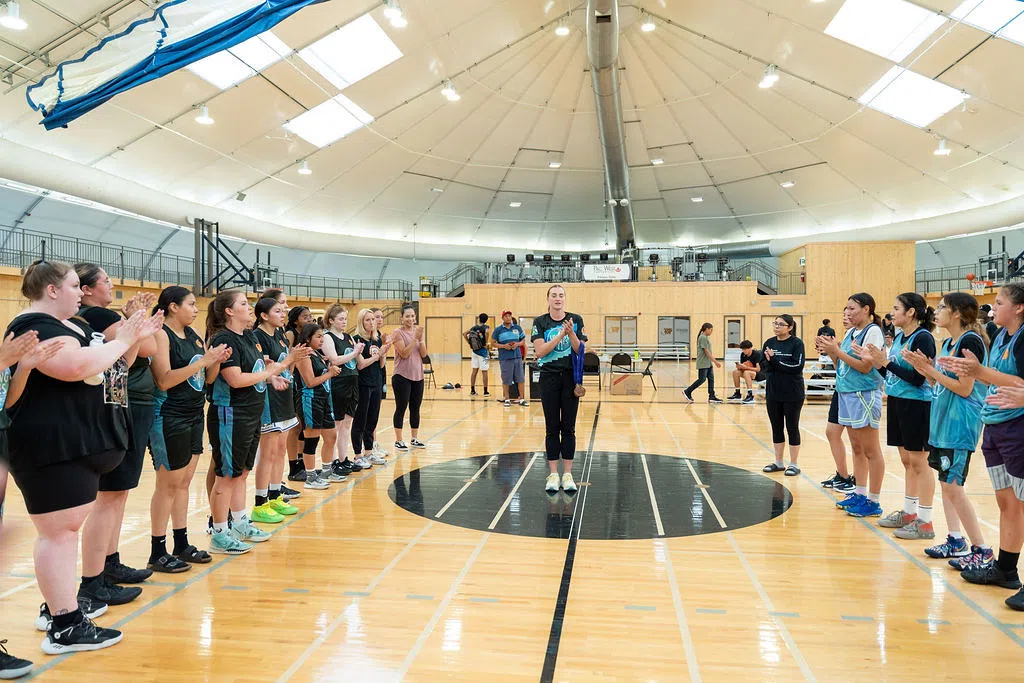
Paige Crozen (centre) at the 2023 LSIBL Championships in 2023 (photo: AFCS)

That’s the special thing about the league. All kids can participate at no cost to the athletes,” said Crozen. “We work hard to find sponsorships and grants to be able to cover all the costs. I think our sponsors have seen the value of keeping this league going.”

The idea for the league came over 15 years ago, when Tanton and his brother, Mason, envisioned a league that would look like what they wished they had as young athletes. After many years of trying to obtain funding through the federal government, they were notified through AFCS that they had been approved for funding.

In 2020, they started with socially-distanced basketball camps around the province, and in 2021, launched the first year of the league. Every subsequent year has seen more youth participate in the league.

I’m really inspired by the willingness of the people who want to make this work,” said Tanton

When you get to a certain age, you start wanting to give back to your community. We’re starting to see some of these athletes come back as coaches in order to give back.”

A major part of LSIBL is not just the hoops and the hardwood, but opportunities they can provide off the court. During tournaments like the provincial championships in Saskatoon, teams have down-time between games, said Tanton, which enables time for workshops.

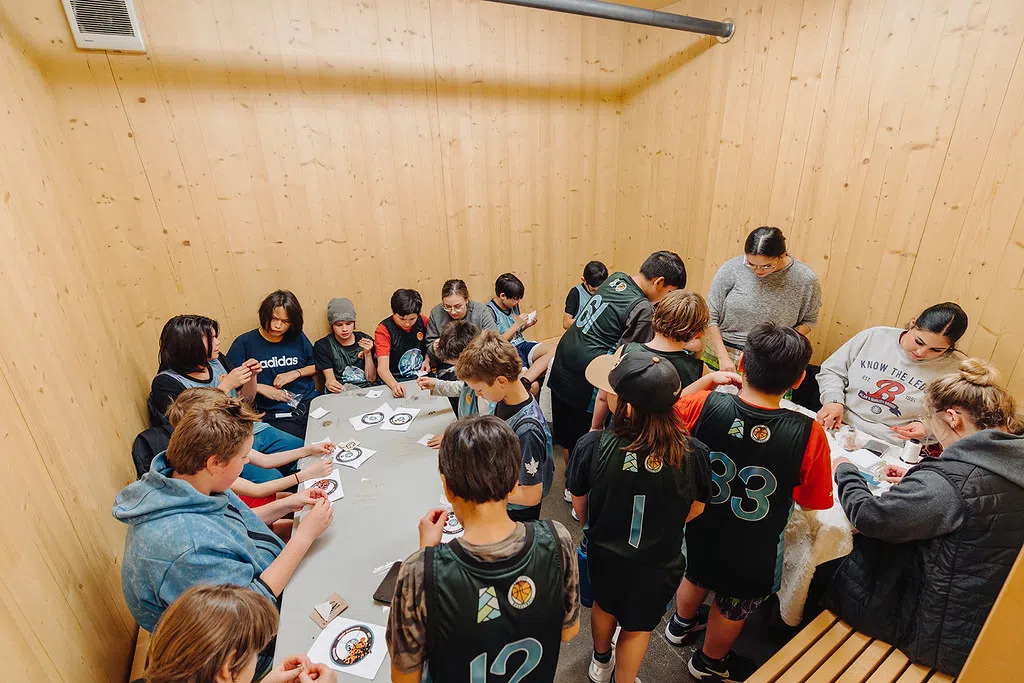
Beading workshop at the 2023 LSIBL Junior Championship (photo: AFCS)

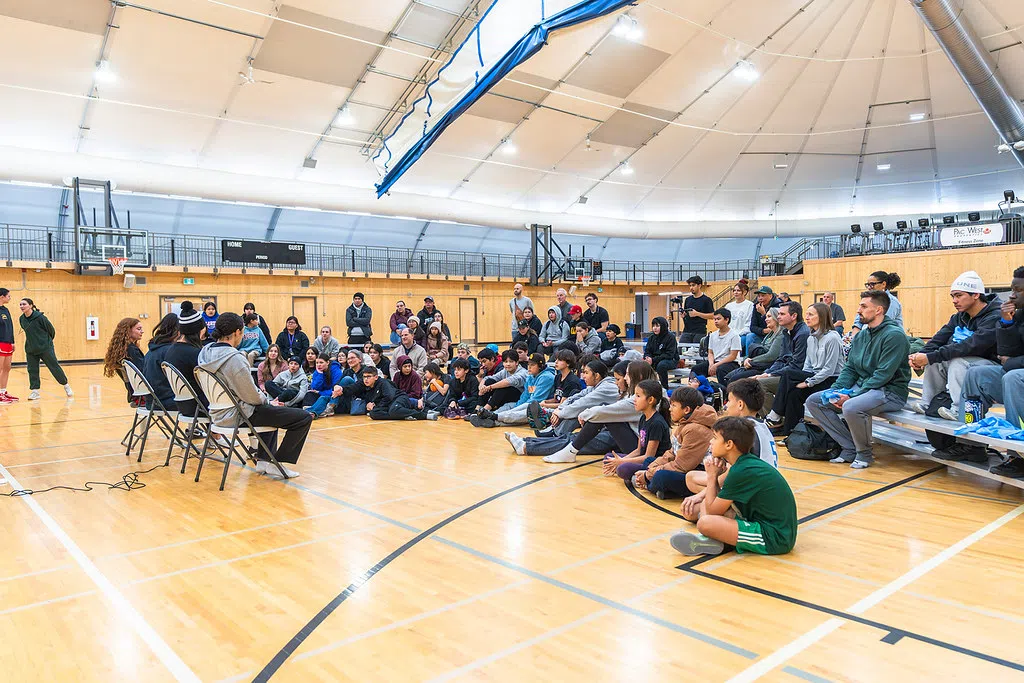
League workshops offered to athletes and coaches have included a sports psychologist speaking about managing anger, online workshops from various vocational and athletic leaders, coaching mentorship programs, and sessions with Elders, knowledge keepers, and artists. They are hoping to provide employment readiness workshops, as well as references for potential applicants to jobs or schools.

Over 50 workshops have been held since the inception of LSIBL.

We are celebrating Indigenous culture in Saskatchewan and the many strengths of our athletes. So instead of focusing on other factors that get brought up, like obesity or addiction, let’s talk about our athletes from a strength-based perspective,” said Crozen.

I think that’s a huge component – athletes here feel celebrated.”

Similar to many of the youth today, Tanton said that while growing up, he struggled with his personal identity. He said basketball helped him connected with his cultural identity, as well as mature and develop into the adult he is today. He hopes basketball and LSIBL has a similar impact on youth around Saskatchewan.

We see the confidence level grow of the athletes who have come through the program. We want them to persevere and push through challenges,” said Tanton.

We want them to finish school, to chase their dreams, to accomplish their life goals. When we see kids on that path, that’s the championship right there.”

Athlete workshop at the 2025 LSIBL Junior Championship (photo: AFCS)